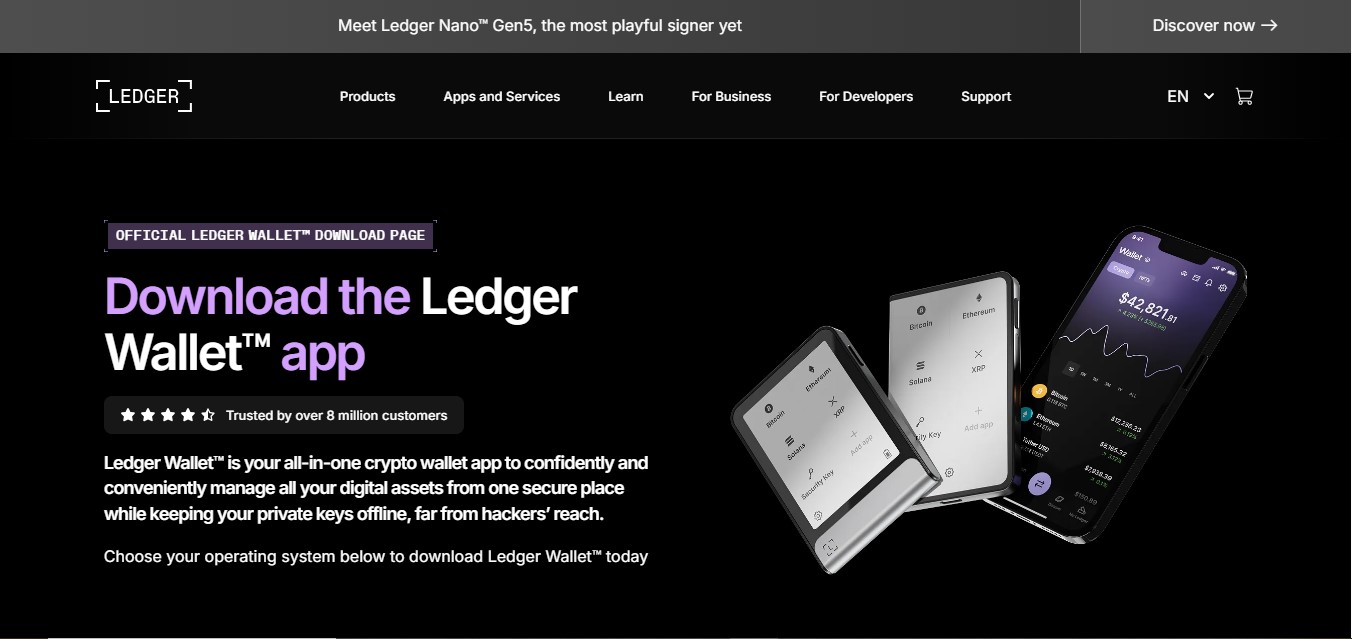
Ledger Start – Easy Crypto Wallet Setup & Security
In today’s digital financial landscape, cryptocurrencies are no longer just an experimental asset—they are an integral part of the global economy. However, as digital assets gain popularity, security becomes a top concern. Exchanges are convenient but often vulnerable to hacking and fraud, making self-custody solutions critical for anyone serious about protecting their investments. Ledger, a global leader in hardware wallets, provides a solution that combines unparalleled security with user-friendly software, giving you full control of your crypto assets.
This guide, Ledger Start – Easy Crypto Wallet Setup & Security, will take you step-by-step through setting up your Ledger device, using Ledger Live software, and following best practices to safeguard your digital assets.
What Is Ledger?
Ledger is a hardware wallet manufacturer renowned for providing one of the most secure ways to store cryptocurrencies. Hardware wallets like the Ledger Nano S Plus and Ledger Nano X store private keys offline, protecting them from malware, phishing attacks, and unauthorized access.
Ledger devices work in tandem with Ledger Live software, a desktop and mobile application that enables you to manage, send, receive, and stake cryptocurrencies. By combining hardware-level security with a powerful software interface, Ledger ensures that your crypto remains safe while still being easy to access and manage.
Unboxing Your Ledger Device
When you receive a Ledger hardware wallet, it is essential to verify that it is authentic and untampered. A Ledger package typically includes:
Ledger hardware device (Nano S Plus or Nano X)
USB cable
Instruction manual
Recovery sheet for recording your backup seed
Important: Do not use the device if the packaging looks damaged or tampered with. Ledger hardware wallets are tamper-resistant, but verifying authenticity ensures maximum security from the start.
Step 1: Connecting Your Ledger Device
Begin your Ledger setup by connecting your device to your computer or smartphone:
Plug in the Ledger device using the USB cable (or connect via Bluetooth for Ledger Nano X).
Power on the device. You will see options to “Configure as new device” or “Restore from recovery phrase.”
For first-time users, select “Configure as new device”. If you have an existing recovery phrase, choose “Restore from recovery phrase.”
Step 2: Setting Up a PIN Code
A PIN code protects your Ledger device from unauthorized access:
Choose a 4–8 digit PIN.
Confirm the PIN by entering it again on the device.
Security tips for your PIN:
Avoid obvious combinations like 1234 or 0000.
Memorize your PIN; never store it digitally.
Enter it discreetly to prevent anyone from seeing it.
The PIN is your first layer of security. Without it, your Ledger device cannot be accessed.
Step 3: Generating a Recovery Phrase
After setting your PIN, your Ledger device will generate a 24-word recovery phrase. This phrase is the most critical backup for your wallet:
Write the 24 words on the recovery sheet provided.
Store the sheet offline in a safe, secure location such as a safe or safety deposit box.
Important: Never take a photo or store the recovery phrase digitally. Anyone with access to your recovery phrase can access your crypto. Ledger devices also support optional passphrase-protected wallets, allowing for hidden accounts and added security.
Step 4: Installing Ledger Live Software
Ledger Live is the official software interface for Ledger hardware wallets. It allows you to:
Manage cryptocurrency accounts
Send and receive crypto securely
Buy, sell, or swap cryptocurrencies
Stake supported coins to earn rewards
Installation steps:
Download Ledger Live from the official Ledger website.
Install the software on Windows, macOS, or Linux.
Open Ledger Live and follow the prompts to connect your Ledger device.
Ledger Live will guide you through the initial setup, firmware updates, and account creation.
Step 5: Adding Cryptocurrency Accounts
Once Ledger Live is installed and your Ledger device is connected, you can add cryptocurrency accounts:
Open Ledger Live and select “Add Account.”
Choose the cryptocurrency you want to manage (Bitcoin, Ethereum, Cardano, etc.).
Ledger Live will sync with your device to generate secure addresses.
You can add multiple accounts for the same cryptocurrency or different blockchains, making it easy to manage a diversified crypto portfolio.
Step 6: Sending and Receiving Cryptocurrency
Ledger Live allows secure cryptocurrency transactions while keeping your private keys safe:
Receiving Cryptocurrency
Open the relevant account in Ledger Live.
Click “Receive” and confirm the address on your Ledger device.
Share the verified address with the sender.
Sending Cryptocurrency
Click “Send” in Ledger Live.
Enter the recipient’s address and the amount.
Verify and approve the transaction directly on your Ledger device.
All transactions must be confirmed on the device, ensuring that even if your computer is compromised, your crypto remains secure.
Step 7: Staking and Rewards
Ledger Live supports staking for multiple cryptocurrencies, allowing you to earn rewards:
Supported coins include Tezos, Ethereum, Cosmos, and more.
Staking is initiated and confirmed directly on your Ledger device.
Ledger Live tracks staking rewards in real time, making it easy to monitor your earnings.
Staking through Ledger ensures that your assets remain under full self-custody while still participating in network consensus.
Security Best Practices
To maintain maximum security:
Store your recovery phrase offline in a secure location.
Always verify transaction details on your Ledger device.
Use a strong PIN code and consider passphrase-protected wallets.
Regularly update Ledger Live software and your Ledger device firmware.
Avoid downloading Ledger software from unofficial sources.
Consider a fireproof or waterproof safe for your recovery sheet.
Following these practices reduces the risk of theft, hacking, or accidental loss of your crypto assets.
Troubleshooting Common Issues
Ledger device not recognized:
Check your USB connection and try a different port.
Restart Ledger Live and your device.
Ledger Live not syncing:
Ensure your internet connection is active.
Confirm your device firmware is updated.
Restart Ledger Live and reconnect the device.
Forgot PIN:
You will need your 24-word recovery phrase to reset the device and restore access.
Ledger offers detailed guides and customer support for troubleshooting any issues.
Why Ledger Is a Trusted Choice
Ledger is globally recognized for its security, reliability, and user-friendly design:
Over 5 million devices sold worldwide.
Private keys are never stored online, protecting assets from hacks.
Ledger Live provides an all-in-one solution for crypto management, staking, and transaction tracking.
Continuous updates ensure compatibility with new cryptocurrencies and emerging security standards.
Ledger’s reputation makes it a top choice for both beginners and experienced crypto users.
Conclusion
The Ledger Start – Easy Crypto Wallet Setup & Security guide demonstrates that setting up a Ledger wallet is straightforward, secure, and beginner-friendly. From connecting your device and creating a recovery phrase to managing cryptocurrency accounts and staking coins, Ledger provides a complete ecosystem for safe digital asset management.
By following this guide and adhering to best security practices, you can confidently manage your cryptocurrencies, maintain full self-custody, and protect your digital wealth against the evolving threats in the crypto landscape. Ledger empowers users to enjoy the benefits of cryptocurrency while ensuring security, control, and peace of mind.